The Best Yumblink Pancakes recipe you will fall in love with. Full of tips and tricks to help you make the best pancakes.


Choosing the right kitchen lighting can transform your space from dull to stunning. This guide covers everything you need to know about picking the best fixtures, creating a layered lighting plan, and matching your style. You will learn practical tips that make your kitchen both beautiful and functional.
Your kitchen is the heart of your home. It is where you cook, eat, work, and spend time with family. But one thing that often gets overlooked is kitchen lighting. Good lighting makes a huge difference. It sets the mood, helps you see what you are doing, and even makes your space look bigger. Yet so many people settle for boring overhead bulbs and call it a day.
If you are ready to do better, this guide is for you. We will walk you through everything you need to know about how to choose kitchen lighting that looks great and works well. From pendant lights to under-cabinet strips, we cover it all. By the end, you will feel confident picking the perfect setup for your kitchen.
Key Takeaways
- Layer your lighting: Combine ambient, task, and accent lights for a balanced kitchen.
- Match fixtures to your style: Choose lights that complement your kitchen design and cabinets.
- Consider brightness and color temperature: Pick the right wattage and tone for each area of your kitchen.
- Placement matters: Hang pendant lights at the right height over islands and counters.
- Use dimmers: They give you flexible control over the mood and function of your space.
- Think about energy efficiency: LED lights save money and last much longer than older options.
📑 Table of Contents
- Why Kitchen Lighting Matters More Than You Think
- Types of Kitchen Light Fixtures You Should Know
- How to Choose the Right Brightness and Color
- Placement Tips That Make a Big Difference
- Matching Your Lighting to Your Kitchen Style
- Energy Efficiency and Smart Lighting Options
- Common Mistakes to Avoid When Choosing Kitchen Lighting
- Quick Tips for Choosing Kitchen Lighting
- Final Thoughts on Choosing Kitchen Lighting
Why Kitchen Lighting Matters More Than You Think
Lighting is not just about seeing your food. It shapes the entire feel of your kitchen. Think about it. A bright, well-lit kitchen feels welcoming and clean. A dim, poorly lit one feels cramped and gloomy. The right setup can even make your kitchen cabinets and countertops pop.
Good lighting also serves real purposes. You need enough light to chop vegetables safely. You need focused light to read a recipe. And you need soft light to enjoy breakfast at the table. Each of these needs a different type of light. That is why layered lighting is so important.
The Three Layers of Kitchen Lighting
Professional designers use three layers when planning a kitchen. Each layer has a specific job.
- Ambient lighting: This is your general, overall light. It comes from ceiling fixtures like recessed cans or a central chandelier. It fills the room with base light.
- Task lighting: This targets specific work areas. Think under-cabinet lights over the prep space or a bright bulb over the stove. It helps you see clearly while cooking.
- Accent lighting: This adds style and depth. It highlights a beautiful backsplash, a open shelf, or a piece of art. Pendant lights over an island are a great example.
When you combine all three layers, your kitchen feels balanced and complete. No harsh shadows, no dark corners, just a space that looks and feels amazing.
Types of Kitchen Light Fixtures You Should Know
The market is full of options, and that can feel overwhelming. But knowing the main types makes it much easier. Here are the most popular choices for today’s kitchens.
Pendant Lights
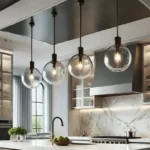
Pendant lights hang from the ceiling on a cord, chain, or rod. They are one of the most popular choices for modern kitchens. A single large pendant works well over a dining table or a long island. A cluster of smaller pendants adds a dramatic look.
If you have an island, consider glass pendant lights for your kitchen island. They add a touch of elegance and let light pass through beautifully. These fixtures come in all shapes, sizes, and styles. You can find sleek metal ones, rustic glass ones, and everything in between.
Recessed Lights
Recessed lights sit inside the ceiling. They create a clean, streamlined look. These are excellent for providing even ambient light across the whole room. They work especially well in kitchens with low ceilings where hanging fixtures might feel cramped.
One thing to watch out for: placement. You want to space them evenly and aim them at key areas like the countertop or the stove. Poor placement can leave dark spots.
Under-Cabinet Lights
Under-cabinet lights are a game changer for task lighting. They mount directly under your upper cabinets and shine light down onto the counter. This is the best way to eliminate shadows while chopping, mixing, or reading a recipe.
You can find them in LED strip, puck, or bar styles. They are easy to install and use very little energy. If you want bright, practical light where you actually work, this is the one to choose.
Chandeliers and Semi-Flush Mounts
If your kitchen has a dining area or a breakfast nook, a chandelier can be a stunning focal point. Semi-flush mounts sit close to the ceiling and work well in smaller spaces. Both options add a decorative touch that overhead canisters simply cannot match.
How to Choose the Right Brightness and Color
Not all light is created equal. Two factors determine how a light looks and feels: brightness and color temperature. Getting these right is one of the most important parts of how to choose kitchen lighting.
Understanding Brightness (Lumens)
Brightness is measured in lumens, not watts. The higher the lumens, the brighter the light. Here is a simple guide for kitchens:
- Ambient lighting: Aim for about 300 to 400 lumens per square meter.
- Task lighting: Go brighter, around 500 to 700 lumens per square meter.
- Accent lighting: Softer is fine, around 200 to 300 lumens.
As a rule of thumb, a typical kitchen needs around 5,000 to 10,000 total lumens. This includes all light sources combined. If you are unsure, a little extra brightness never hurts. You can always dim it down.
Choosing the Right Color Temperature
Color temperature is measured in Kelvin (K). It changes the feel of the light.
- Warm white (2700K-3000K): This gives a cozy, yellowish glow. It feels inviting and relaxed. Great for dining areas and breakfast spots.
- Neutral white (3500K-4000K): This is a clean, balanced light. It works well for the main kitchen area where you cook and prep food.
- Cool white (5000K-6500K): This is bright and blue-white. It feels clinical and is best for task areas like the stove or sink.
Most kitchens look best with a mix. Use neutral white for general areas and warm white for dining spaces. This creates depth and visual interest.
Placement Tips That Make a Big Difference
Where you place your lights matters just as much as what you choose. Bad placement can ruin even the most expensive fixtures. Here are some tips to get it right.
Over the Sink and Stove
These are your two main work zones. You want bright, focused light here. A single fixture centered over the sink works well. For the stove, consider a narrow bar light or a small pendant. Make sure the light is not blocked by the cook’s body when standing at the range.
Over the Kitchen Island
If you have an island, lighting it is a must. Pendant lights are the go-to choice. Hang them about 30 to 36 inches above the island surface. This gives you plenty of head room while still casting light down where you need it.
For longer islands, use three or more pendants spaced evenly apart. A good rule is to leave about 12 to 18 inches between each fixture. This creates a balanced, gallery-like look.
Along the Ceiling Perimeter
If you do not want a central fixture, try placing lights along the ceiling edges. This works well in galley kitchens or narrow spaces. It washes the room with even light and avoids the harsh spotlight effect of a single overhead.
Matching Your Lighting to Your Kitchen Style
Your lights should match the overall look and feel of your kitchen. A modern kitchen needs sleek fixtures. A farmhouse kitchen calls for warm, rustic touches. Here are some quick style matches to help you decide.
Modern and Minimalist
Go for clean lines, matte black or brushed nickel finishes, and simple geometric shapes. Recessed lights and slim pendants work perfectly. Keep it simple and avoid ornate details.
Farmhouse and Rustic
Think warm woods, antique brass, and woven shades. A rustic chandelier or a row of Edison-bulb pendants adds charm. You can also add decorative kitchen knobs and hardware to tie the look together across cabinets and drawers.
Traditional and Classic
Crystal chandeliers and brass fixtures shine in traditional kitchens. Look for fixtures with detailed metalwork and warm-toned glass. These pieces act as statement items and pull the whole room together.
Transitional and Eclectic
This style mixes old and new. Try a mix of metal finishes, unusual shapes, or a combination of pendants and recessed lights. The key is balance. Do not go overboard with too many different styles competing for attention.
Energy Efficiency and Smart Lighting Options
Today’s kitchen lighting options are smarter and more efficient than ever. Making the switch to energy efficient lighting saves you money and reduces your environmental footprint.
Why LED Is the Best Choice
LED lights use up to 80 percent less energy than traditional incandescent bulbs. They also last up to 25 times longer. That means fewer replacements and lower electricity bills. The initial cost is slightly higher, but the savings add up fast.
LEDs also come in a wide range of color temperatures and brightness levels. You can find dimmable LEDs, colored LEDs, and even smart LEDs that you control from your phone.
Smart Lighting Features to Consider
Smart lighting systems let you adjust brightness, color, and timing from anywhere. Some systems let you set scenes like “cooking mode” or “dinner party mode.” Others work with voice assistants like Alexa or Google Home.
These features add convenience and a touch of luxury to your kitchen. They are especially useful if you want to change the mood quickly without getting up from your seat.
Common Mistakes to Avoid When Choosing Kitchen Lighting
Even with the best intentions, people make mistakes when planning kitchen lights. Here are the most common ones and how to avoid them.
- Using only one light source: A single ceiling fixture creates harsh shadows and leaves corners dark. Always layer your lights.
- Ignoring dimmers: Dimmers give you flexibility. Without them, you are stuck with one brightness level all day.
- Choosing the wrong size fixture: A tiny pendant in a large kitchen looks lost. A giant chandelier in a small kitchen feels overwhelming. Match the size to your space.
- Forgetting about color temperature: Mixing warm and cool lights in the same area creates a jarring look. Pick a consistent temperature for each zone.
- Skipping task lighting: Overhead lights alone are not enough for food prep. Under-cabinet or task lights are essential for safety and comfort.
Avoiding these mistakes saves you time, money, and frustration. It also ensures your kitchen looks polished and professional.
Quick Tips for Choosing Kitchen Lighting
Here are some fast, actionable tips you can use right away.
- Start with a plan. Sketch your kitchen and mark where you need light most.
- Mix fixture types for a layered, dynamic look.
- Choose dimmable bulbs for every main fixture.
- Stick to two or three finishes for a cohesive feel.
- Consider the height of your ceilings before picking hanging fixtures.
- Use small kitchen lamps on open shelves or peninsulas for extra warmth and charm.
- Test the lighting before committing. Many stores allow you to see fixtures in a sample kitchen setting.
These simple steps make a big difference. They help you create a lighting plan that is both beautiful and practical.
Final Thoughts on Choosing Kitchen Lighting
Choosing kitchen lighting does not have to be stressful. With the right knowledge, you can create a space that is bright, beautiful, and perfectly suited to your needs. Remember to layer your lights, match your fixtures to your style, and pay attention to brightness and color temperature.
Take your time and enjoy the process. Your kitchen is one of the most important rooms in your home. It deserves lighting that makes it shine. Whether you go with sleek pendants, warm chandeliers, or simple recessed cans, the right choice will make every meal feel special.
Start small if you need to. Add a few well-placed pendants or a set of under-cabinet lights. You will be amazed at the difference. Good lighting turns a functional kitchen into a space you actually love spending time in.
Frequently Asked Questions
What is the best lighting for a small kitchen?
For small kitchens, recessed lights and under-cabinet LEDs work best. They save space and provide bright, even light. A single small pendant or a small kitchen lamp on a shelf adds extra warmth without crowding the room.
How many lights do I need in my kitchen?
A good rule is to aim for about 30 to 40 lumens per square foot. Combine ambient, task, and accent lights to reach this total. The exact number depends on your kitchen size and layout.
Should kitchen lights be warm or cool?
Neutral white (around 3500K to 4000K) works best for most kitchens. It is bright enough for cooking but still feels welcoming. Use warmer tones (2700K-3000K) for dining areas or breakfast nooks.
Can I mix different lighting styles in my kitchen?
Yes, mixing styles can look great. Just stick to two or three consistent finishes like black, brass, or white. This keeps the look unified even when you use different fixture types.
Do I need an electrician to install kitchen lights?
Simple replacements like swapping bulbs or adding plug-in under-cabinet lights can be DIY. However, hardwired fixtures, recessed lights, and new circuits should be handled by a licensed electrician for safety.
What is the best bulb type for kitchen lighting?
LED bulbs are the best choice. They are energy efficient, long-lasting, and available in many brightness levels and color temperatures. They also produce very little heat, which is important near the stove and oven.
=== CONCLUSION ===
Choosing the right kitchen lighting is one of the easiest ways to upgrade your home. It boosts both the look and the function of your space. With the tips in this guide, you have everything you need to make smart, confident choices. Layer your lights, pick the right fixtures, and do not forget dimmers. Your kitchen will thank you every time you walk in.