The Best Yumblink Pancakes recipe you will fall in love with. Full of tips and tricks to help you make the best pancakes.


Hey food lovers! I’m beyond excited to bring you a recipe for Zhajiangmian today! It’s one of the most comforting and flavorful noodle dishes out there, and I’ve teamed up with Lee Kum Kee to make it even more amazing. This dish is so easy to make, and I’ll be using some of Lee Kum Kee’s incredible sauces to bring you all those authentic flavors. You can find their sauces at major retailers in the UK and abroad! And just so you know, it’s Black Friday today, so don’t miss out on Lee Kum Kee’s 30% off sale – get your sauces while stocks last!
Method
1. Prepare the Pork
Start by mixing your pork with a pinch of salt, pepper, and a small piece of star anise. This combination helps bring out the rich, savory flavors of the pork and makes it even more flavorful as it cooks. Make sure the pork is evenly coated with the seasoning. If you’re using pork belly, you can cut it into small pieces or opt for minced pork for a different texture.
2. Heat the Oil
In a wok or large pan, add 3-4 tablespoons of vegetable oil over medium-high heat. Allow the oil to heat up and shimmer before adding the pork. The oil needs to be hot to properly sear the pork and get it crispy. Don’t rush this step it’s key to achieving that perfect texture on the meat.
3. Cook the Pork
Once the oil is hot, add your seasoned pork to the pan. Stir-fry the pork, breaking it up as it cooks. Continue cooking until the pork begins to brown, and the water from the meat evaporates. This process helps the pork become crispy on the edges, adding that irresistible texture to your dish. The pork should be slightly golden and fragrant, signaling that it’s time for the next step.
4. Add the Aromatics
Now, toss in the minced garlic, chopped onion, ginger, and the white parts of the spring onions. Stir-fry everything together for about a minute, letting the aromatics release their fragrance and blend into the pork. This step builds the foundation of the dish’s rich flavor profile, so don’t rush it!
5. Add the Sauce
It’s time to introduce the star of the show the sauce! Gradually add the pre-mixed sauce ingredients to the pan in intervals. Stir well after each addition to ensure the pork is coated evenly. Be sure to let the sauce mix with the pork to create a harmonious blend of flavors. The sauce will begin to thicken, creating a sticky, savory coating on the pork.
6. Simmer the Sauce
Next, pour about 60-70ml of water into the pan. Stir the mixture thoroughly and bring it to a boil. This helps the sauce come together and allows the flavors to meld even more. Let it simmer for a few minutes, stirring occasionally, until the sauce thickens to your desired consistency. You want the sauce to coat the pork without being too runny.
7. Taste and Adjust
Taste your sauce! This is an important step if it’s too salty, you can balance it with a bit more sugar. If it’s not salty enough, feel free to add a touch more soy sauce. Adjusting the seasoning is key to making sure your dish is just right for your taste buds.
8. Serve It Up
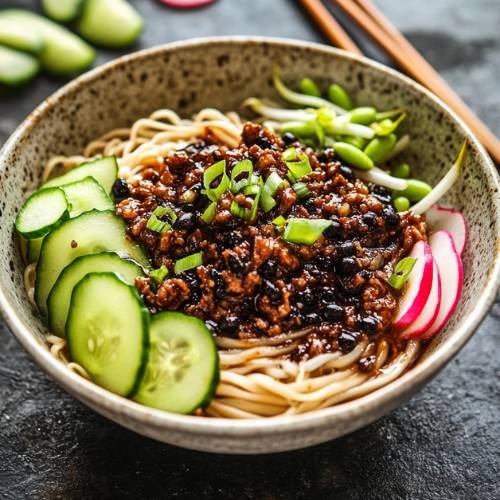
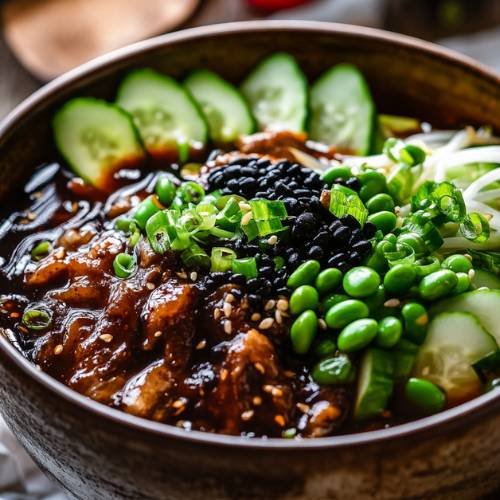
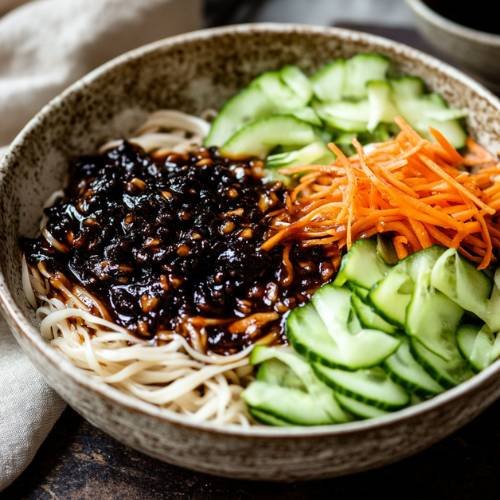
Now, it’s time for the fun part serving! Spoon a generous amount of the savory, flavorful pork mixture over a bowl of boiled noodles. I recommend using wheat noodles for the best texture, but feel free to use any kind you prefer. Top the noodles with your choice of sliced veggies, such as cucumber, carrots, or bean sprouts. Give everything a good mix, and your Zhajiangmian is ready to eat!
Necessary Tools
- Wok or large pan
- Knife and chopping board
- Mixing bowl for the sauce
- Strainer or colander for noodles
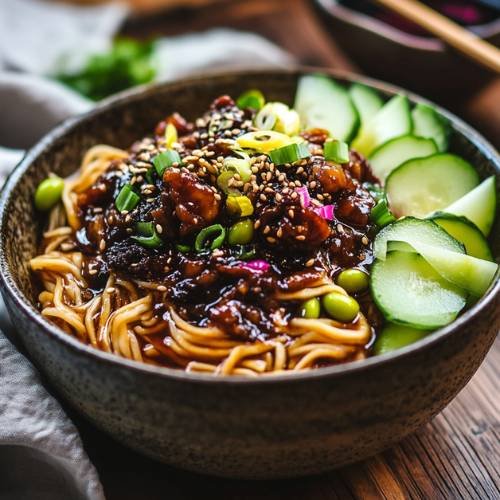
Zhajiangmian
Cuisine: ChineseDifficulty: EasyServings
4
servingsPrep time
15
minutesCooking time
25
minutesTotal time
40
minutesIngredients
200g pork belly (or minced pork)
Pinch of salt & pepper
Small piece of star anise
3 garlic cloves, minced
1/2 onion, minced
2 spring onions, minced
1 tsp minced ginger
Sliced vegetables cucumber, carrots, bean sprouts, watermelon radish, etc.
3-4 tbsp vegetable oil
Boiled noodles of your choice (I used wheat noodles)
Sauce (mix in a bowl)
3 tbsp Soy Bean Sauce
2 tbsp Hoisin Sauce
1/2 tsp sugar (optional, since Hoisin sauce has some sweetness)
1 tsp Dark Soy Sauce (or more for a darker color)
1 tsp Double Deluxe Soy Sauce
1/2 tbsp Chinese Cooking Wine (or use more water if skipping)
1 tbsp water (to help thin out the paste)
Around 60-70ml water for the pan
Directions
- Prepare the pork Start by mixing the pork with salt, pepper, and a pinch of star anise. It helps to bring out those rich flavors in the dish!
- Heat the oil In a pan or wok over medium-high heat, add about 3-4 tbsp of vegetable oil. Let it get nice and hot before adding the pork.
- Cook the pork Stir fry the pork until it starts to brown, and all the water from the pork evaporates. You’ll see it turning slightly crispy on the edges yum!
- Add the aromatics Now, toss in the garlic, onion, ginger, and white parts of the spring onions. Stir fry everything for about a minute to let all those flavors blend together.
- Add the sauce Slowly add the sauce ingredients in intervals, making sure to mix well after each addition. Stir until the pork is coated with the sauce.
- Simmer Add about 60-70ml of water to the pan. Stir everything together and bring it to a boil. Let it simmer until the sauce thickens up to your liking.
- Taste and adjust Give your sauce a taste! You can add a bit more soy sauce or sugar if you want it a bit saltier or sweeter.
- Serve it up Place a couple of spoonfuls of this savory pork goodness over your boiled noodles. Top with your choice of sliced veggies and mix it all together. You’re ready to eat!
Notes
- When stir-frying the pork, make sure not to overcrowd the pan. You want the pork to brown nicely, so give it enough space to cook evenly.
- Be careful with the soy sauces – they can be quite salty. It’s always a good idea to taste the sauce before adding too much.
- If you prefer a lighter sauce, you can always adjust the amount of water to your liking, or leave out some of the darker soy sauce for a lighter color.

Serving Suggestions
Zhajiangmian is a perfect dish to enjoy on its own, but if you’re feeling extra, try pairing it with some crispy fried dumplings or spring rolls on the side. A refreshing cucumber salad works great as a light contrast to the savory noodles. The texture and crunch will balance out the rich flavors beautifully!
Fun Fact
Did you know that Zhajiangmian originated in Beijing? The name “Zhajiangmian” translates to “fried sauce noodles,” which perfectly describes the dish. It’s super popular in Northern China, and every family has its own version of this savory noodle dish. It’s also commonly enjoyed as a comfort food during family gatherings and celebrations!
Conclusion
This Zhajiangmian recipe is an easy yet delicious way to bring a bit of Beijing into your home. The rich, savory sauce pairs perfectly with the noodles, and the crispy pork just takes it to the next level. Plus, with the help of Lee Kum Kee’s amazing sauces, you can enjoy authentic flavors without all the fuss. So, what are you waiting for? Give this a try and enjoy a comforting bowl of homemade Zhajiangmian!