The Best Yumblink Pancakes recipe you will fall in love with. Full of tips and tricks to help you make the best pancakes.


Hey friends! So, last week, I caught a nasty bug (still kinda recovering, and let me tell you, there was only one thing that could comfort my soul, my throat, and my sinuses… Kimchi Jjigae! If you’ve never tried it, you’re in for a treat. It’s this spicy, savory, and slightly sour Korean stew made with kimchi, pork, tofu, and all the umami goodness you could ask for. Plus, I had one piece of well-fermented homemade kimchi just sitting there, so it was meant to be. Let’s dive in!
Method
Prepare the Rice Water
Start by washing your rice. Discard the first rinse, but make sure to keep the water from the second rinse. You’ll need about 2 cups of this rice water for the stew. Rice water gives the broth a unique flavor and silky texture that adds to the overall depth of the dish.
Cook the Pork Belly
Heat a medium-sized pot over medium heat and add a bit of oil. Once the oil is hot, toss in the pork belly (or your choice of protein). Let it brown slightly for about 3-4 minutes. This browning step is important because it creates a flavorful base that will infuse the stew with richness.
Add the Vegetables and Kimchi
Once the pork is browned, add the sliced onions, spring onions, and the kimchi to the pot. Stir everything together and let the kimchi cook for about a minute. This allows the kimchi to release its juices, which are key to giving the stew that signature sour kick.
Spice It Up
Sprinkle the gochugaru (Korean chili flakes) over the mixture and stir everything well to evenly coat the ingredients. At this point, pour in the prepared rice water, which will serve as the liquid base for the stew.
Add the Seasonings
Next, it’s time to add the kimchi juice, soy sauce, sugar, MSG (if you’re using it), and saeujot (Korean salted shrimp) to the pot. Mix everything together and bring the stew to a boil. The kimchi juice and soy sauce provide a savory, salty depth, while the sugar balances out the acidity of the kimchi.
Simmer with Tofu
Once the stew comes to a boil, carefully add the sliced tofu into the pot. Reduce the heat and cover the pot, letting it simmer for 6-10 minutes. The tofu will soak up the flavors of the stew, making it tender and delicious. You can adjust the time depending on how firm or soft you prefer your tofu.
Add Mushrooms and Final Touches
In the final step, toss in the enoki mushrooms and give everything a quick stir. Let the mushrooms cook for another 2-3 minutes until they soften. Add extra spring onions for a fresh burst of flavor just before serving.
Necessary Tools
- A medium-sized pot
- Wooden spoon or spatula
- Knife for chopping
- Cutting board
- A rice washer or strainer for rinsing rice
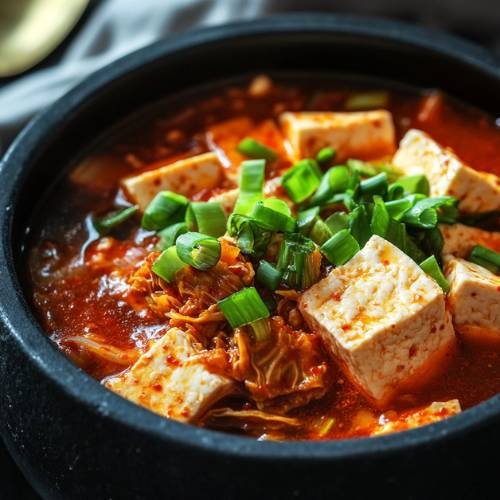
Kimchi Jjigae
Cuisine: KoreanDifficulty: EasyServings
2
servingsPrep time
10
minutesCooking time
20
minutesTotal time
30
minutesIngredients
150g pork belly (or you can use chicken, beef, or mushrooms for a veggie version)
1/4 tsp salt
1/4 tsp pepper
1/4 onion, sliced
2 garlic cloves, minced
1 spring onion, sliced
Around 1/2 cup kimchi
1/2 -1 tbsp gochugaru (Korean chili flakes – adjust based on your spice level!)
2 cups rice water (water from the second rinse of rice)
Kimchi juice (the more, the better!)
1/2 tbsp soup soy (or light soy – but be cautious with the salt)
1/2 tsp sugar
1/4 tsp MSG (if you’re feeling fancy)
1/2 tsp saeujot(Korean salted shrimp – if you have it, use it for that extra umami, but oyster sauce works too)
Tofu (I like to add it soft and silky)
Enoki mushrooms (they’re perfect for adding texture!)
Directions
- Start by washing your rice. Discard the first wash, but keep the water from the second rinse. You’ll need about 2 cups of this rice water for the stew.
- Heat a pot over medium heat and add some oil. Once hot, toss in the pork belly (or your choice of protein) and let it brown a little. This step is key because it adds that rich flavor base!
- Add the sliced onions, spring onions, and kimchi into the pot. Stir them together and let the kimchi cook for about a minute to release some of its juice.
- Sprinkle in the gochugaru (Korean chili flakes) and mix everything together. Then, pour in the rice water.
- Now, add in that magical kimchi juice, soy sauce, sugar, MSG, and saeujot (if you’re using it). Bring the whole thing to a boil!
- Once it’s boiling, carefully add in the sliced tofu. Cover the pot and let it simmer for 6-10 minutes to heat up the tofu and let all those flavors meld together.
- Right before you finish, toss in the enoki mushrooms and extra spring onions. Give it a quick stir and serve hot with a bowl of rice!
Notes
- Rice Water Amount Make sure to use the second rinse of rice water for the best consistency and flavor in the stew. If you don’t have enough rice water, you can always add plain water, but the rice water gives a unique flavor.
- Adjust the Spice Kimchi jjigae can get pretty spicy depending on the type of gochugaru you use. Start with less and adjust as you go, especially if you’re not used to a lot of heat!
- Tofu Texture If you like soft tofu, add it at the end. If you prefer it to be firmer, you can sauté it before adding it to the stew.


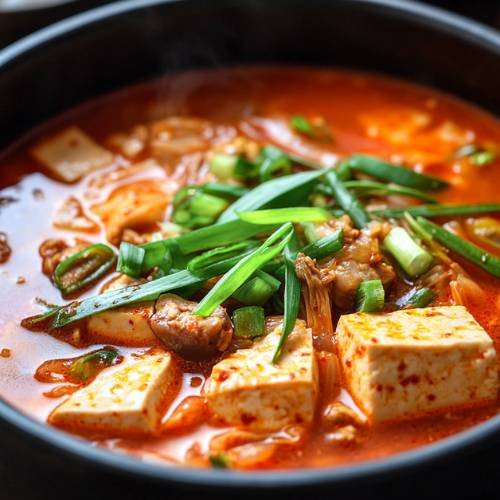
Serving Suggestions
- Serve this Kimchi Jjigae with steamed white rice or even some crispy fried rice for extra texture.
- You could also pair it with kimchi pancakes or even a simple side of sautéed greens for a balanced meal.
- If you’re feeling extra cozy, top it with a raw egg and let it cook into the stew for added richness.
Fun Fact
Did you know that kimchi jjigae is often made with leftover kimchi? It’s the perfect dish to use up that extra kimchi sitting in your fridge, and the longer kimchi ferments, the better the stew tastes!
Conclusion
Kimchi jjigae is like a hug in a bowl, and if you’re ever feeling under the weather or just need something comforting, this is the dish for you. Plus, it’s super easy to make and packs all the flavors of Korea in one pot. Whether you’re cooking it for yourself or sharing it with someone special, it’s sure to warm your heart and your belly. Stay cozy and enjoy!