The Best Yumblink Pancakes recipe you will fall in love with. Full of tips and tricks to help you make the best pancakes.


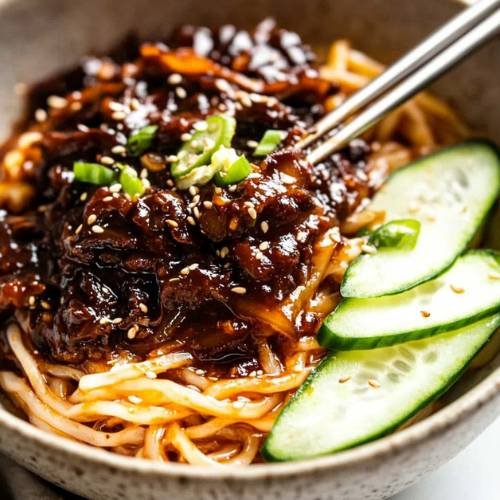
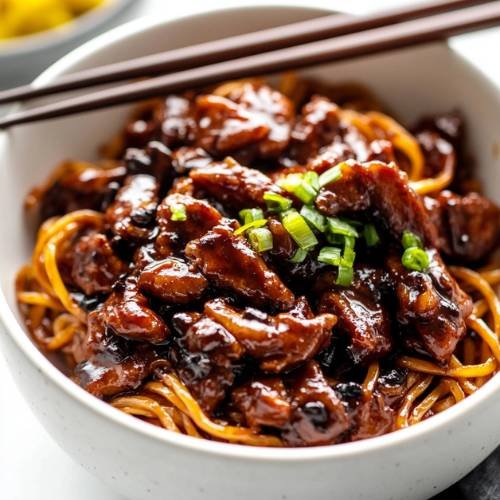
If you’ve ever seen jjajangmyeon in K-dramas, you know it’s a dish that gets devoured with so much enthusiasm! It’s rich, savory, and oh-so-satisfying, making it a must-try for anyone who loves bold flavors. The slurping, the sauce, the texture it all looks so amazing, and trust me, it tastes just as good as it looks! In this recipe, I’m sharing how to make a homemade version that’s as close as you can get to the real deal. Plus, adding a little egg makes it a perfect 10/10! Let’s dive into this delicious Korean comfort food!
Method
Fry the Black Bean Paste
Start by heating a non-stick pot over medium heat. Add the neutral oil, followed by the black bean paste (chunjang). Stir and cook until the paste begins to bubble in the center, which should take around 3 to 5 minutes. This step is crucial as it helps bring out the deep, rich flavors of the black bean paste, making the base of the jjajangmyeon deliciously savory.
Cook the Pork Belly
Next, heat about 3 tablespoons of the leftover oil from frying the black bean paste in a wok or large pan. Add the pork belly chunks and pan-fry them until they turn golden brown. The crispy, caramelized pork adds a wonderful texture and flavor to the dish. Once the pork is browned, proceed to the next step.
Add Aromatics and Vegetables
Once the pork belly is golden and crispy, add the minced green onion into the wok. Stir-fry for another minute until the green onion becomes fragrant. Then, add in the minced garlic, ginger, and sugar. Stir well to combine everything. This mix of ingredients will create a savory aroma and lay the flavor foundation for your jjajangmyeon.
Cook the Vegetables
Now it’s time to add the chopped onions, zucchini, and cabbage. Stir-fry these vegetables for a few minutes until they start to brown and soften. The vegetables will add a lovely crunch and sweetness to the dish, complementing the savory pork and black bean paste.
Add the Sauces and Paste
Once the vegetables have started to brown, pour in the oyster sauce, light soy sauce, and optional MSG for added umami flavor. Stir these ingredients together before adding the fried black bean paste to the mix. Continue to stir everything until the sauce evenly coats the vegetables and meat, creating a rich and flavorful base for the jjajangmyeon.
Simmer the Sauce
Pour in the chicken stock (or water) into the wok, stirring the mixture as you go. Bring the entire dish to a boil over medium-high heat. Once it begins to boil, reduce the heat and allow the sauce to simmer for about 10 minutes. This simmering step allows the flavors to meld together and intensify. Make sure to taste and adjust the salt as needed to achieve the perfect seasoning.
Thicken the Sauce
To thicken the sauce, slowly add the cornstarch slurry (made by mixing 1 tablespoon of cornstarch with 1 tablespoon of water) into the sauce while stirring continuously. Keep stirring until the sauce reaches the desired consistency, thick enough to coat the noodles when served.
Prepare the Noodles
While the sauce is simmering, cook the jjajangmyeon noodles according to the instructions on the packet. Once cooked, rinse the noodles in cold water to prevent them from sticking together. This will also help maintain their chewy texture, which is perfect for soaking up the rich black bean sauce.
Serve
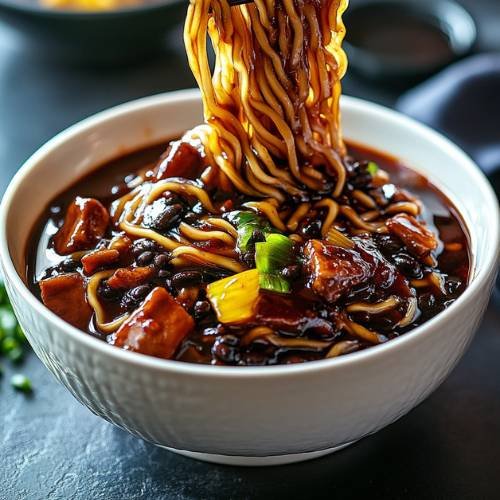
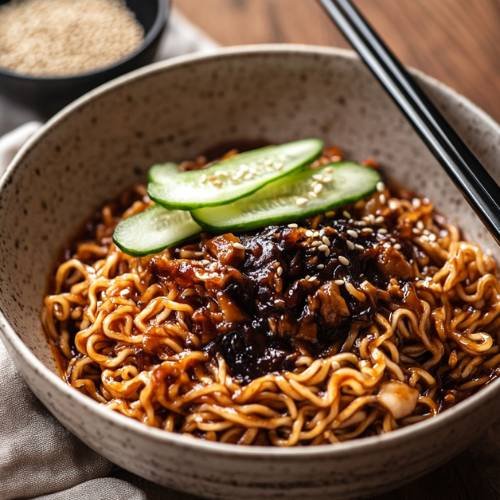
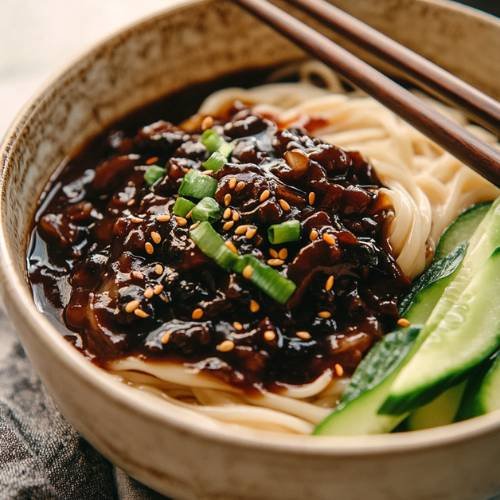
To serve, place the cooked noodles on individual plates or bowls. Pour the savory jjajang sauce generously over the noodles, ensuring every strand is covered in the flavorful mixture. For an authentic touch, serve with sliced cucumbers and danmuji (yellow radish) on the side for extra crunch and tang. Optionally, top your jjajangmyeon with a soft-boiled egg to make it even more delicious!
Necessary Tools
- Non-stick pot
- Wok or large pan
- Spoon for stirring
- Knife and chopping board
- Measuring spoons
- Cornstarch slurry mixing bowl
Jjajangmyeon
Cuisine: Korean, ChineseDifficulty: EasyServings
2
servingsPrep time
15
minutesCooking time
25
minutesTotal time
40
minutesIngredients
1/4 cup neutral oil
3 tbsp black bean paste (chunjang)
180g pork belly, cut into chunks
1 small zucchini (120g)
1 green onion, minced
100g onion, chopped
120g cabbage, chopped
150g jjajangmyeon noodles (thick wheat noodles)
1 tsp garlic, minced
1/2 tsp ginger, minced
2 tbsp sugar
1/4 tsp MSG (optional)
1.5 cups chicken stock or water
1 tbsp light soy sauce
1 tbsp oyster sauce
Salt to taste
1 tbsp cornstarch
1 tbsp water (for slurry)
Directions
- Fry the black bean paste In a non-stick pot, add neutral oil and black bean paste (chunjang). Stir and fry over medium heat until the paste starts bubbling in the middle. This step is important to bring out the rich flavors of the paste.
- Cook the pork belly In a wok, add about 3 tablespoons of the leftover oil from frying the paste. Then, add the pork belly chunks and fry until golden brown. This creates a crispy texture and savory flavor for your jjajangmyeon.
- Add aromatics and vegetables Once the pork is golden, add the minced green onion and stir-fry until fragrant. Then, toss in the garlic, ginger, and sugar, mixing well.
- Cook the vegetables Add the chopped onions, zucchini, and cabbage to the wok. Fry until the veggies start to brown, giving the dish an extra savory flavor.
- Add the sauces and paste Stir in the oyster sauce, soy sauce, and optional MSG. Then, add the fried black bean paste to the mix. Keep stirring until all the ingredients are well combined.
- Simmer Pour in the chicken stock (or water) and bring the mixture to a boil. Once it’s boiling, lower the heat and let it simmer for about 10 minutes. Taste and adjust salt as needed.
- Thicken the sauce To thicken the sauce, slowly stir in the cornstarch slurry (1 tbsp cornstarch mixed with 1 tbsp water) and continue stirring until the sauce reaches your desired thickness.
- Prepare the noodles Cook the jjajangmyeon noodles according to the packet instructions. Once cooked, rinse them in cold water to prevent them from sticking.
- Serve Pour the jjajang sauce over the noodles, and serve with sliced cucumbers and danmuji (yellow radish) on the side for added crunch and flavor.
Notes
- Frying the chunjang. Be careful when frying the black bean paste. It can splatter and burn, so keep the heat medium and stir constantly.
- Stir the sauce When adding the cornstarch slurry, make sure to stir it in slowly to avoid lumps and ensure an even texture in your sauce.
- Adjusting salt Always taste your sauce before adding extra salt. The soy sauce and oyster sauce already bring some saltiness, so adjust accordingly.
Serving Suggestions
- For a true Korean experience, top the jjajangmyeon with a soft-boiled egg! The rich yolk adds a creamy texture to the dish.
- Pair with kimchi on the side for a little extra spice.
- You can also add a few pickled vegetables to balance out the rich and savory flavors of the dish.
Fun Fact
Did you know that jjajangmyeon was first introduced to Korea by Chinese immigrants in the early 20th century? It quickly became a beloved comfort food, and now it’s a classic in Korean cuisine!
Conclusion
Making jjajangmyeon at home is a fun way to enjoy this beloved Korean dish without having to go out! With its savory pork, rich black bean paste, and perfectly cooked noodles, this dish is sure to impress. Plus, with a little egg and some fresh sides, you’ll have a complete meal that’s as delicious as it is comforting. Enjoy your homemade jjajangmyeon, and happy cooking!